When Optional Coverage Becomes Expensive Across Multiple Vehicles
You've secured quotes from three carriers for your household's two vehicles. Every quote meets Arkansas's $25,000 bodily injury per person, $50,000 bodily injury per accident, and $25,000 property damage minimum. Then the add-ons appear: collision, comprehensive, rental reimbursement, roadside assistance, gap coverage. Each optional coverage adds a separate premium line for each vehicle on your policy.
The structural reality: optional coverages multiply by vehicle count, but not all of them deliver proportional value when you're insuring a household fleet. Some coverages protect the asset itself and scale correctly. Others duplicate protection you already have through your credit card, your auto club membership, or your household emergency fund. This article walks through which optional coverages justify their per-vehicle cost on a multi-car Arkansas policy, and which ones you can drop without increasing your household's actual risk.
Compare car insurance rates in your state
Get quotes from licensed carriers — no obligation, no spam, results in minutes.
Get Your Free QuoteArkansas Annual Auto Premium Per Vehicle
$1,050.78
The average annual auto insurance expenditure per insured vehicle in Arkansas was $1,050.78 in 2023. Optional coverages sit on top of this base, and each coverage multiplies across every vehicle on your policy.
NAIC Auto Insurance Database Report 2023
Collision and Comprehensive Scale Correctly Because They Protect Different Assets
Collision coverage pays to repair or replace your vehicle after an at-fault accident or a single-car crash. Comprehensive coverage pays for damage from theft, vandalism, hail, flood, fire, or animal strikes. Both coverages are optional in Arkansas unless your lender requires them. Both are priced per vehicle, and both protect distinct assets in your household fleet.
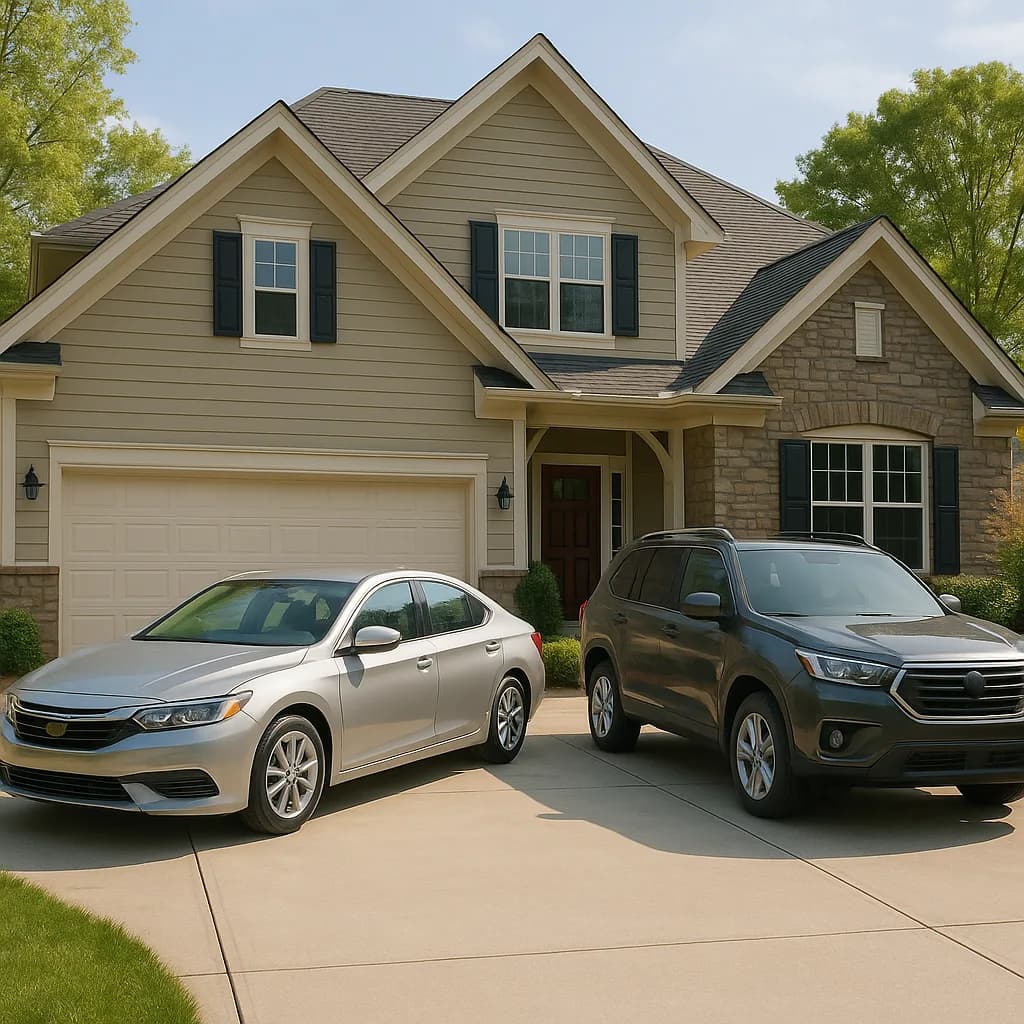
A household insuring a 2018 sedan and a 2021 SUV benefits from collision and comprehensive on both vehicles because each car represents a separate financial exposure. If the sedan is totaled in an at-fault crash, collision pays the actual cash value of that sedan minus your deductible. If the SUV is stolen, comprehensive pays its actual cash value. The coverages do not overlap, and dropping one vehicle's coverage to save premium leaves that vehicle unprotected.
The decision point: compare each vehicle's actual cash value against the annual cost of collision and comprehensive for that vehicle. When a vehicle's value falls below roughly ten times the annual premium for both coverages combined, self-insuring becomes cheaper than continuing to pay the premium.
Deductible choice matters across multiple vehicles. A $500 deductible costs more per month than a $1,000 deductible, but the difference compounds across three or four cars. Choosing a $1,000 deductible on every vehicle in your household and banking the monthly savings builds the fund you need to cover that deductible if a claim happens. Most households file a collision or comprehensive claim on one vehicle every few years, not on every vehicle every year, so the higher deductible pays for itself.
Rental Reimbursement Rarely Justifies Its Cost on Multi-Car Policies

A household insuring three vehicles pays rental reimbursement three times, once per car. If one vehicle is in the shop after a collision claim, only that vehicle's rental reimbursement applies. The other two vehicles' rental coverage sits unused, but you've paid the premium all year. The structural problem: you're paying for rental protection on every vehicle, but you can only rent one car at a time, and most households already have a second or third vehicle available when one is out of service.
The math rarely works. Drop rental reimbursement on multi-car policies unless you genuinely have no backup vehicle and cannot borrow or carpool during a repair.
Related Articles



Roadside Assistance Duplicates Coverage You Likely Already Have
Roadside assistance through your auto insurance policy covers towing, jump-starts, flat tire changes, lockout service, and fuel delivery. The coverage duplicates protection most households already carry through AAA, an auto manufacturer's roadside plan, or a credit card benefit.
Check your existing memberships before adding roadside assistance to your insurance policy. Many auto manufacturers include three to five years of roadside assistance with new vehicle purchases. Several credit cards offer roadside assistance as a cardholder benefit at no additional cost. If you already have one of these, adding roadside assistance to your insurance policy pays twice for the same service.
The insurance version has one advantage: it does not count as a claim against your policy. Calling AAA or your manufacturer's roadside line does not affect your insurance premium. Calling your insurance carrier's roadside assistance also does not count as a claim in most cases, but verify this with your carrier before assuming. If your carrier treats roadside calls as claims, the coverage becomes a liability rather than a benefit. Drop it and use your existing roadside membership.
Arkansas Uninsured Motorist Rate
12.1%
12.1% of Arkansas motorists drove without insurance in 2023. Uninsured and underinsured motorist coverage protects your household when an at-fault driver cannot pay for the damage they caused. This coverage is optional in Arkansas but scales correctly across multiple vehicles because it protects people, not cars.
Insurance Information Institute, 2023
Uninsured and Underinsured Motorist Coverage Protects People, Not Cars
Uninsured motorist (UM) and underinsured motorist (UIM) coverage pays for injuries and vehicle damage when an at-fault driver has no insurance or insufficient liability limits to cover your claim. Arkansas does not require UM or UIM coverage, but 12.1% of Arkansas drivers are uninsured. This coverage is optional, but it protects every person on your policy regardless of which vehicle they're driving or whether they're a passenger in someone else's car.
UM and UIM coverage is priced per vehicle on your policy, but it functions as household protection. If your spouse is injured in an accident caused by an uninsured driver while driving your household's second car, your UM coverage applies. If your teenager is a passenger in a friend's car and that friend is hit by an underinsured driver, your UIM coverage can step in after the at-fault driver's liability limits are exhausted. The coverage follows the people on your policy, not the specific vehicle.
The cost is low relative to the protection it delivers. Given Arkansas's 12.1% uninsured rate, this coverage justifies its cost on every vehicle in your household.
Gap Coverage Matters Only for Financed Vehicles Worth Less Than the Loan
Gap coverage pays the difference between your vehicle's actual cash value and the remaining loan balance if your vehicle is totaled. It applies only to financed or leased vehicles, and only when the loan balance exceeds the vehicle's depreciated value. If you own your vehicles outright, gap coverage does not apply. If your loan balance is less than the vehicle's current value, gap coverage is unnecessary.
The coverage is priced per vehicle and makes sense in specific situations: you financed a new vehicle with a small down payment, you rolled negative equity from a trade-in into the new loan, or you leased a vehicle with a high residual value. In these cases, the loan balance can exceed the vehicle's actual cash value for the first two to three years of the loan term. If the vehicle is totaled during that window, your collision or comprehensive coverage pays the actual cash value, your lender demands the full loan payoff, and gap coverage pays the difference.
Most households insuring multiple vehicles do not need gap coverage on every car. Evaluate each vehicle separately. Drop gap coverage as soon as your loan balance falls below the vehicle's value, and never add it to a vehicle you own outright.
Compare Carriers That Write Multi-Vehicle Policies in Arkansas
Optional coverages add up quickly across a multi-vehicle household, and not every carrier prices them the same way. Collision, comprehensive, and uninsured/underinsured motorist coverage justify their per-vehicle cost because they protect distinct assets or people. Rental reimbursement, roadside assistance, and gap coverage often cost more than the benefit they deliver, especially when you're paying the premium on two, three, or four vehicles.
Review your household's actual exposure before renewing. Drop rental reimbursement if you have a backup vehicle. Drop roadside assistance if you already have AAA or a manufacturer's plan. Drop gap coverage on any vehicle where the loan balance is less than the current value. Keep collision and comprehensive on vehicles worth insuring, and add uninsured/underinsured motorist coverage to every vehicle on your policy. Compare carriers that write multi-vehicle policies in Arkansas and structure your coverage around the risks your household actually faces, not the add-ons a quote sheet defaults to.